


Replacing everything at once is the most expensive bet
A big-bang migration puts the whole operation at risk at the same time: if something breaks, there's no easy way back or way to isolate the failure.
Legacy modernization
We connect the current system via APIs, migrate module by module, and add AI where it makes sense, without a full replacement or downtime.
DELIVERED EXPERIENCE
years of experience
delivered projects
TECHNICAL AND DELIVERY CAPABILITY

Microsoft Partner certified in cloud technologies.

Google Developer Program members.

Experience in B2B software and integrations.









THE RISK OF NOT MODERNIZING
The older the system, the more expensive every change gets, and the more the business depends on knowledge nobody wrote down.
A big-bang migration puts the whole operation at risk at the same time: if something breaks, there's no easy way back or way to isolate the failure.
When the only documentation is two or three people's memory, every change depends on those people staying available.
Without APIs or an integration layer, every new system ends up coupled directly to the legacy database, making every future change more fragile.
Without a diagnosis or priorities, modernization gets driven by whichever department pushes hardest, not by actual business risk or impact.
HOW WE DO IT
The mechanism is chosen based on how critical the module is and how often it changes, not a single migration for the whole system.
We map the current system, its dependencies and risks before touching anything, and prioritize what to modernize first by business impact, not technical ease.
We expose the legacy system through REST APIs or events so new components can consume it without coupling directly to its database.
Scenario: an insurer migrates its policy module to a new platform while claims keeps running on the legacy system, synced through events during the transition.
Each module is validated in production before moving to the next, so the blast radius of any failure stays contained to that piece.
Agents or automations that read and write against the legacy system through that same API layer, without waiting to replace it first to use AI.
The goal isn't modernizing fast, it's modernizing without interrupting billing, customer service, or critical processes while the work is underway.
WHAT WE CONNECT
The integration mechanism depends on data volume and how fast each system needs to find out.
SAP, Tango, or other ERPs connected via REST API or batch processes when data volume justifies it.
Salesforce, HubSpot, or another CRM coexisting with the in-house system during migration, without duplicating customers.
Controlled exposure through a service layer, with no direct access from new systems to the legacy database.
Data flow into agents or AI models without duplicating the business logic that already lives in the current system.
HOW WE IMPLEMENT IT
Four stages, each with a verifiable deliverable before moving to the next.
We map the current system, its integrations, dependencies, and which parts shouldn't be touched yet.
We define the migration order by technical risk and business impact, not by which module is easiest to touch.
We build the layer connecting legacy to new components before migrating the first module.
Each delivery is a module running in production, validated, with the ability to roll back if something doesn't hold up.
FREQUENTLY ASKED QUESTIONS
Clear answers to the most common questions about our services and process.
We reply in under 24 hours
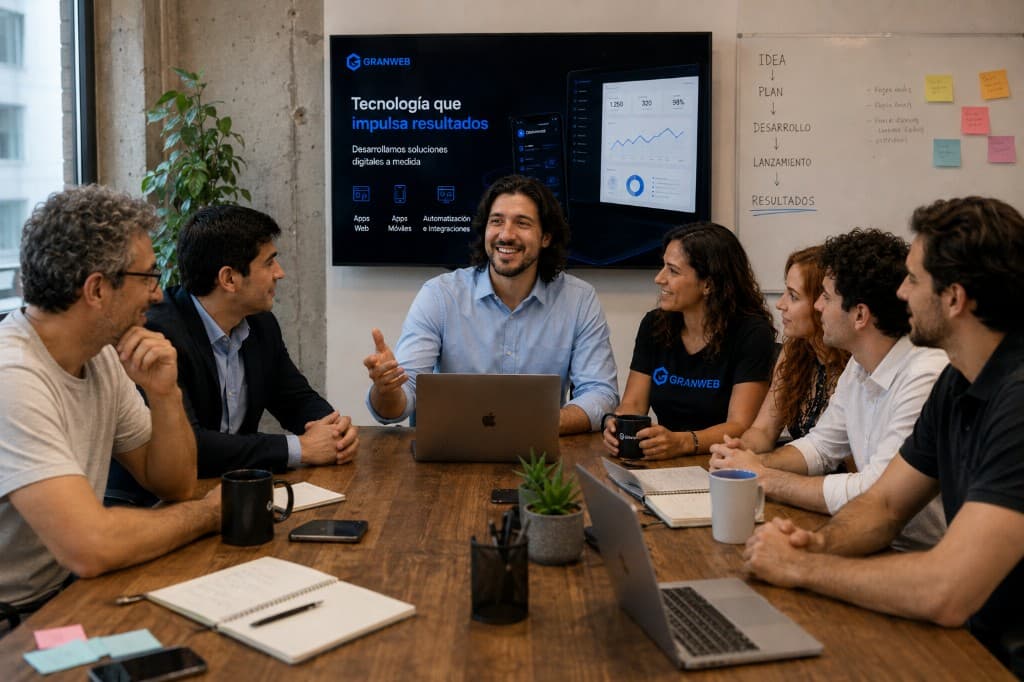
Team and delivery
We define scope, risks, and integrations before development, then deliver through verifiable stages.
We build a foundation ready for more users, modules, and integrations without rebuilding the product.
Delivery from Buenos Aires
Argentina combines an established technology talent market, strong English proficiency, and working hours compatible with the Americas. For Granweb, this supports direct communication and close collaboration with every client.

No. 4 in LatAm
Buenos Aires ranks among the region's largest technology talent markets, according to CBRE 2025.
#26
Argentina's global position in the EF English Proficiency Index.
Location does not replace provider experience, but it can reduce friction through shared working hours, cultural proximity, and an ecosystem accustomed to exporting knowledge.
RFPs and enterprise projects
Granweb evaluates integration initiatives, digital platforms, and custom systems. You can send the documentation currently available even when some technical decisions remain open.
Documentation inbox: contacto@granweb.io
Project documentation
Confidential information
If the material contains sensitive information, we can arrange an NDA and agree on the exchange channel before you share the documentation.
Legacy Modernization
Tell us which system needs to evolve and which part of the operation can't afford to fail.

We apply planning, validation, documentation, quality control, and continuous improvement processes to every project.
Leave us your details. We'll contact you.